
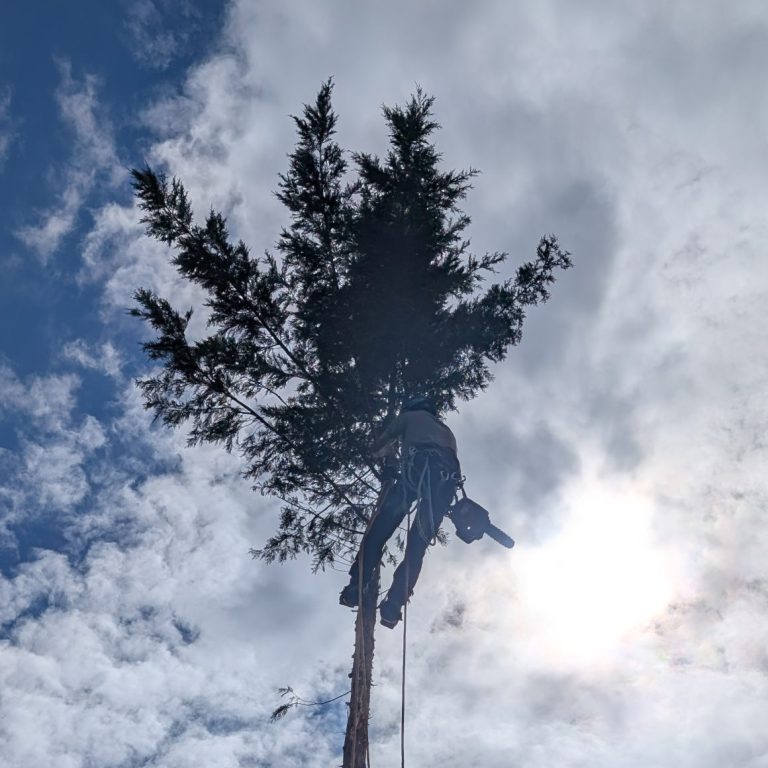
Most of us don’t think too much about our trees until something goes wrong. However, summer is an ideal time to assess the trees on your property. With the canopy fully out, it is much easier to spot signs of disease, stress, or structural weakness.
If you notice any of the following seven signs on your trees, it is worth arranging an inspection to see what is going on.
1. Patchy or Thin Leaf Cover
If one side of your tree is lush and green but another section looks sparse, or the leaves are unusually small, the tree is under stress. While it could simply be drought stress after a dry Kent summer, it can also point to root damage or underlying disease. A professional arborist can diagnose the issue early, often saving the tree through targeted crown thinning to reduce strain on the root system.

2. Large Deadwood in the Canopy
A few dead twigs are normal, but large, brittle dead branches sitting high up in a canopy are a genuine hazard. This is especially critical if the tree overhangs a driveway, patio, or a neighbor’s fence. Deadwood does not fix itself; it requires careful deadwood clearance by a qualified tree surgeon before a summer storm brings it down.
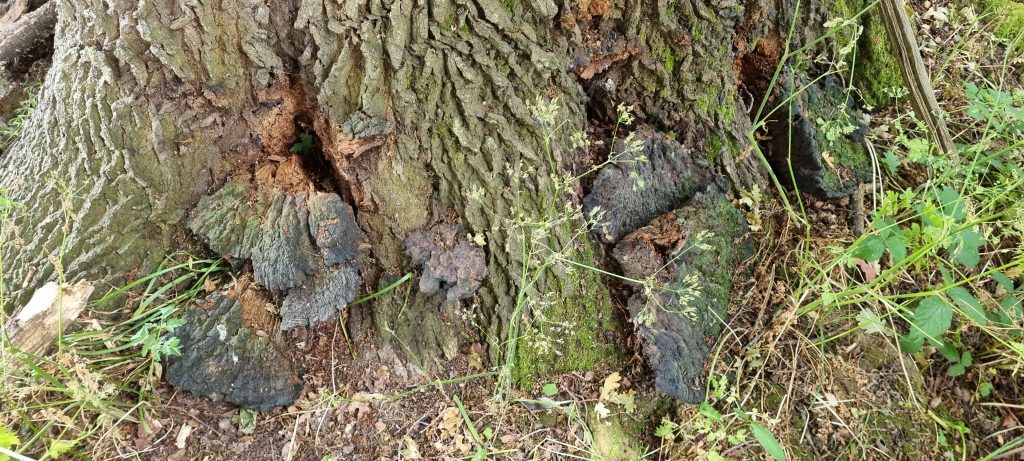
3. Fungus Growing on the Trunk or Base
Bracket fungi (shelf-like growths on the trunk) or mushroom clusters at the base of a tree often signal internal decay. If the core timber is rotting, the structural integrity of the tree is compromised. Before guessing at its stability, have an expert evaluate it. If the internal rot is severe, a controlled tree removal may be necessary to protect your home.
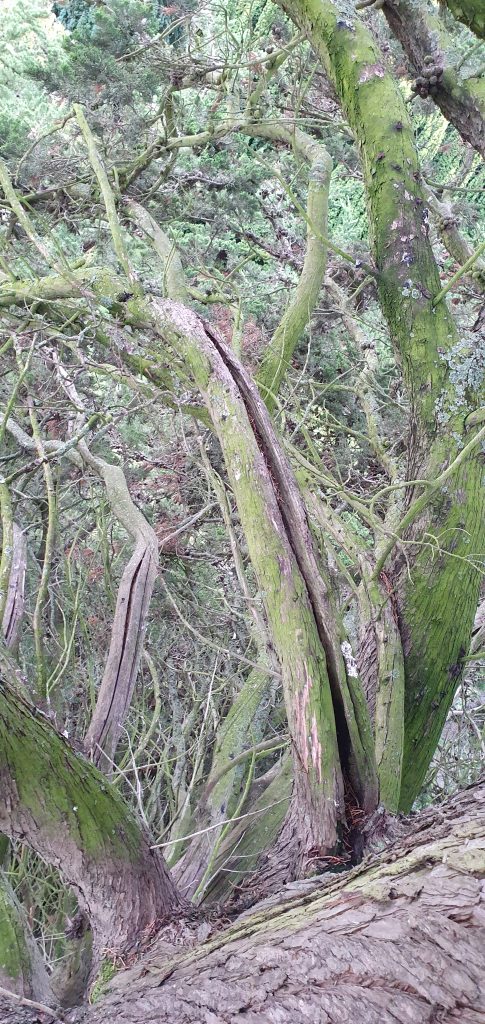
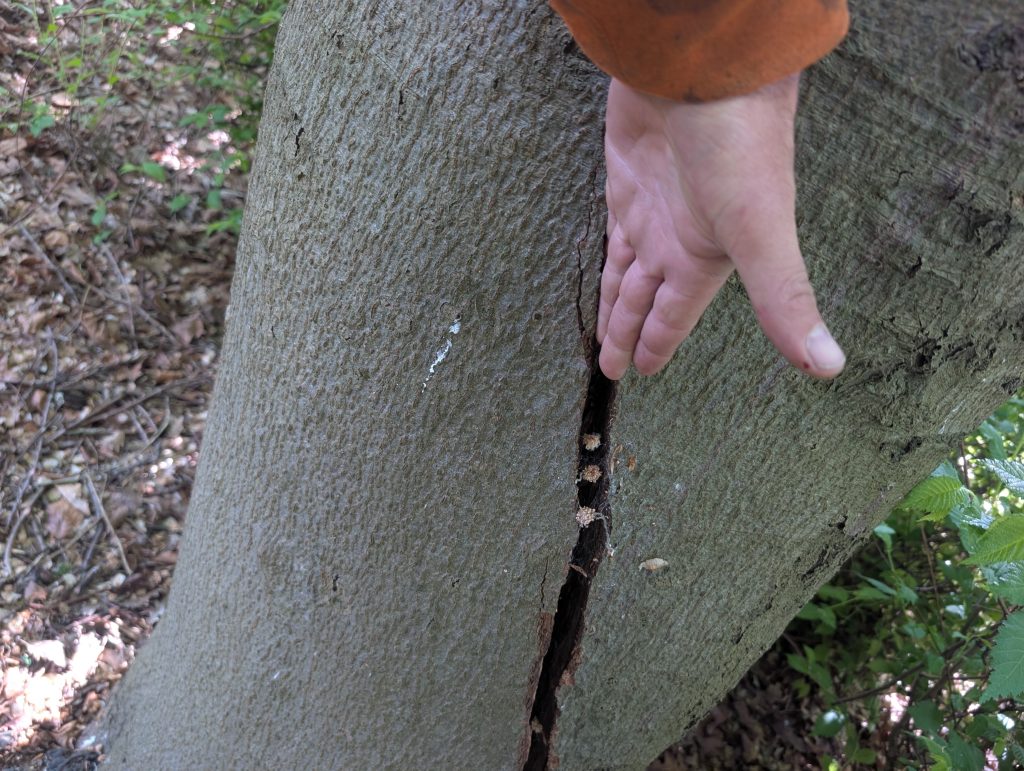
4. Visible Cracks or Splits in the Timber
Any deep, vertical crack running along the main trunk, or a heavy limb that looks like it is starting to split away from the main stem, requires immediate attention. These structural failures often develop quietly over the season and can give way without warning under the weight of heavy summer foliage.
5. A Recent or Progressing Lean
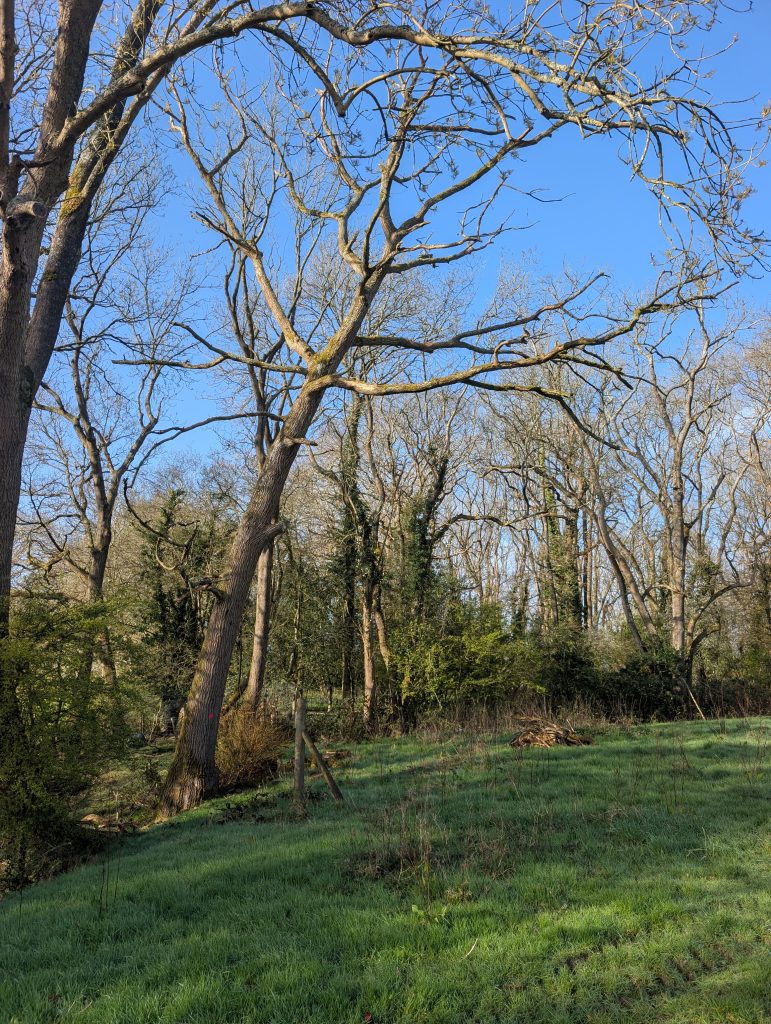
Many trees naturally grow at an angle over decades, which is rarely a concern. However, if a tree has suddenly begun to lean, or an existing lean is noticeably worsening, it indicates root movement or failure beneath the soil. This is a high-risk situation that requires an urgent site visit from a professional tree surgery team.
6. Roots Lifting Boundaries, Patios, or Drains
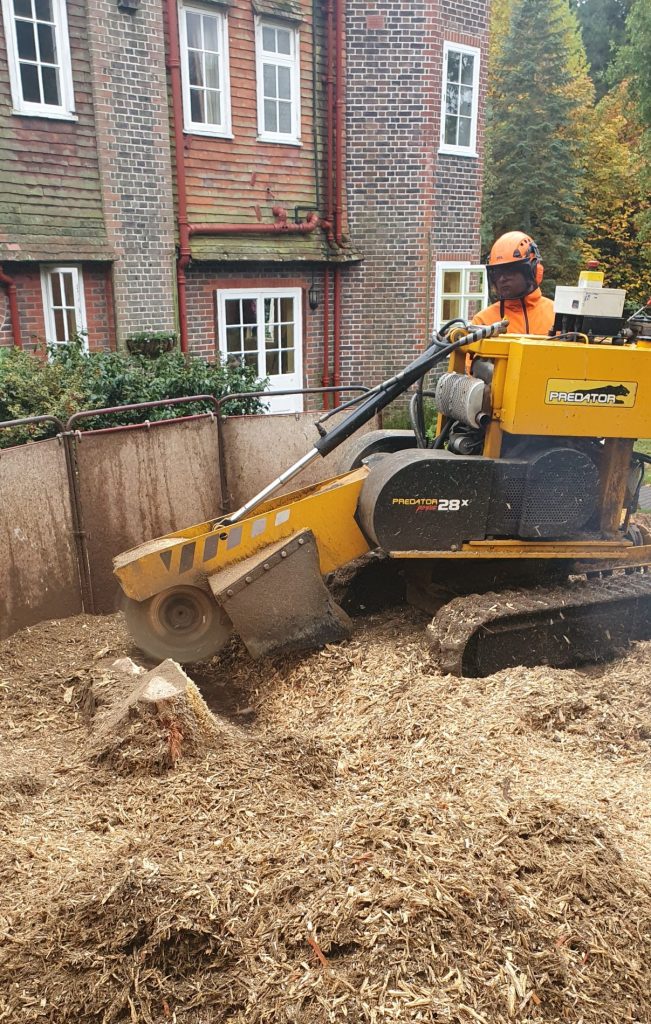
If you have noticed cracked paving, a bulging garden wall, or blocked drains, dominant tree roots are a likely cause. Managing roots near structural boundaries requires a careful balance to protect your property without destabilizing the tree. We can advise on root management or specify a precision stump grinding solution if a problematic tree has already been removed.
7. Overhanging Branches Near Buildings or Cables
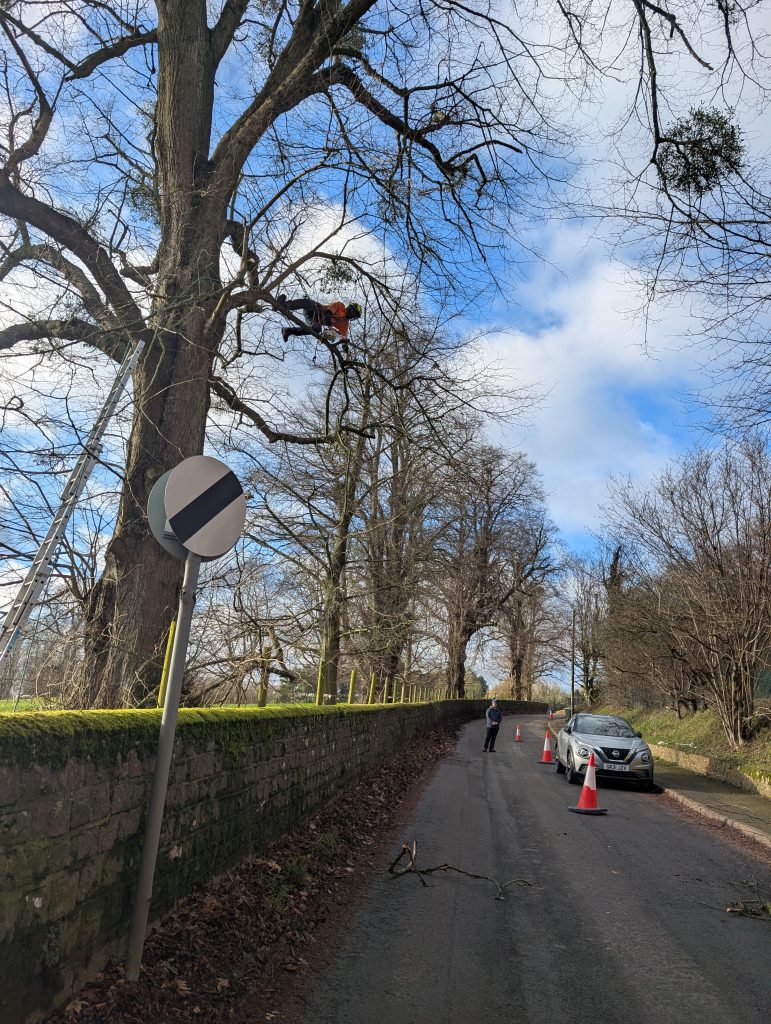
This is less about tree health and more about proactive risk management. Encroaching branches can easily damage roof tiles, block gutters, or interfere with overhead lines. A professional tree surgeon can execute a precise crown reduction or lateral pruning to clear your boundaries safely without harming the tree’s natural shape.
When to Call an Expert
If any of these signs look familiar, get in touch with us at Tree Services Ltd to arrange a site visit.
We are a local, fully qualified, and insured team covering Tonbridge, Sevenoaks, Gravesham and the wider Kent area. We will evaluate your trees, and provide straightforward, honest advice, even if that advice is to simply leave the tree exactly as it is!
(Storm damage and winter maintenance bring their own set of challenges—we will cover those in more detail later in the year as the weather turns.)
Contact Tree Services Ltd today for a free, no-obligation quote.