
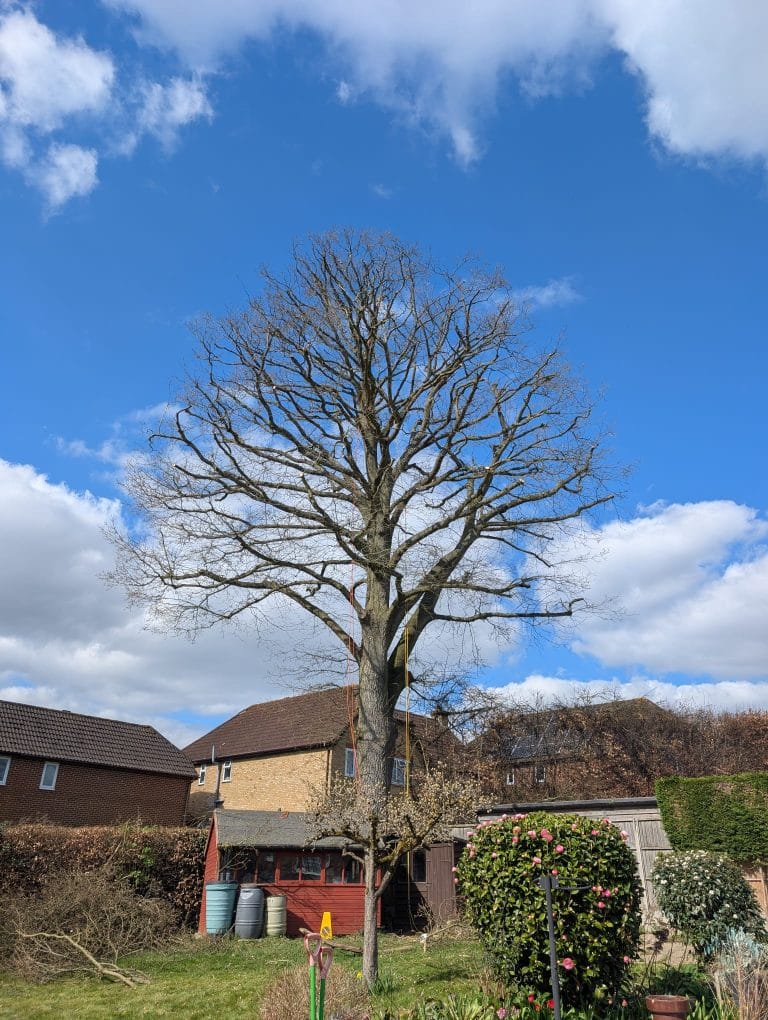
“When should I book in for Tree Pruning?” is easily the most common question we hear, so we created our tree pruning calendar uk guide for common UK species. While every tree is unique, understanding the natural rhythm of your garden doesn’t have to be complicated. We’ve put together this friendly guide to help you plan your garden maintenance with confidence — covering not just when to prune, but how different techniques actually benefit your trees.
The Professional Perspective
For most routine maintenance, any time of year is generally fine. However, timing becomes vital for fruit production, flowering cycles and supporting local wildlife. While we aim for the “optimal” window for long-term health, our professional priority is always your safety, and the safety of the surrounding area. If a tree poses a risk, action should be taken, regardless of what the tree pruning calendar says.
Understanding Pruning Techniques — and Why They Matter
Pruning isn’t a single action — different techniques serve different purposes, and knowing which one your tree needs is just as important as picking the right season. Here’s a quick guide to the main methods we use:
Crown Thinning — Selectively removing some of the smaller inner branches to reduce the overall density of the canopy, without changing its size or shape. This lets more light and air move through the tree, which helps keep foliage and lawns underneath healthier, reduces the damp, still conditions that fungal diseases thrive in, and lowers wind resistance so the tree is more stable in storms.
Crown Lifting — Removing the lower branches to raise the height of the canopy. This is the technique we reach for when a tree overhangs a path, driveway, or building and needs clearance underneath, and it also lets more light reach the ground beneath the tree, benefiting whatever is growing there.
Crown Reduction — This is often used where a tree has simply outgrown its space, or where removing weight from the outer canopy reduces the risk of branches failing in high winds. We shorten the outer branches throughout the crown to reduce the tree’s overall size and spread, while keeping its natural shape. Cutting back to healthy growth points also allows the tree to recover and re-grow in a controlled way.
Deadwooding — Removing dead, dying, or diseased branches. Beyond tidying the tree up, this is a genuinely important health and safety measure: dead wood is where fungal pathogens and disease most often take hold, and it’s also the most likely part of the tree to fail and fall without warning.
Pollarding — A traditional technique involving the more severe removal of branches back to a framework of major limbs, encouraging a flush of new, controlled growth. This works well on younger trees being trained into a particular shape, but isn’t something we’d generally recommend on a mature tree.
One thing all of these techniques have in common: they’re about working with the tree’s own growth points and structure, not against them. This is also why we’d always steer clients away from “topping” which indiscriminately hacks back large sections of the crown which might look like a quick fix but leaves the tree structurally weaker and far more vulnerable to disease and future storm damage.
Not sure which of these techniques your tree needs? Our Tree Surgery and Pruning Services cover all of the above, carried out by NPTC qualified & Insured Tree surgeons to British Standard BS3998.
The Tree Pruning Calendar
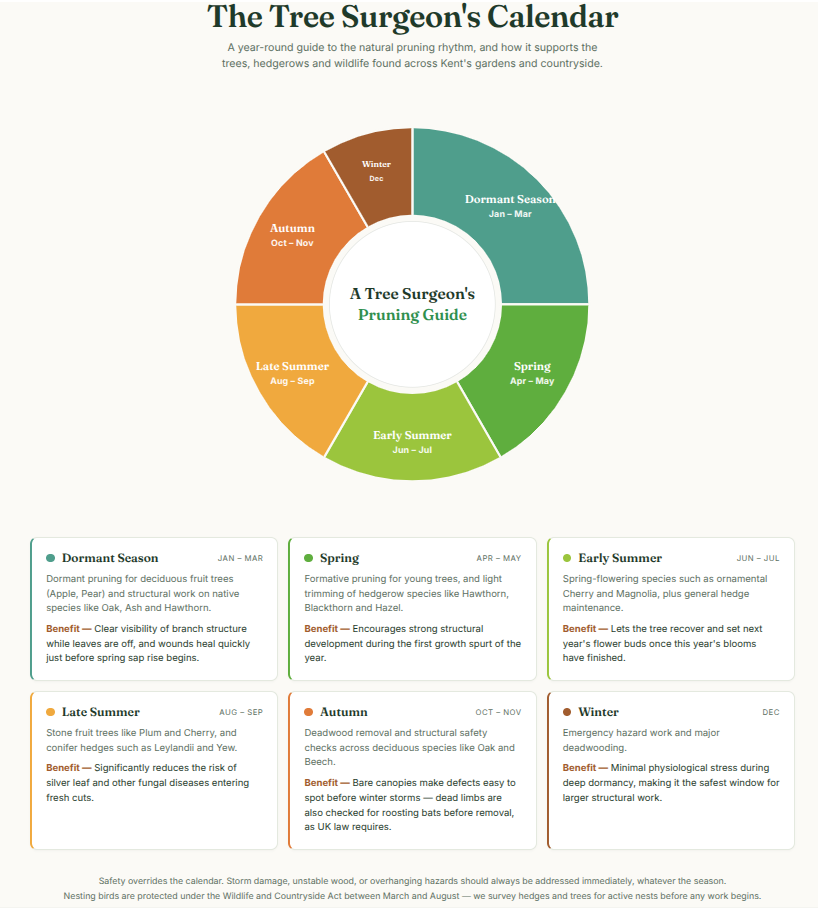
A Professional Commitment to Wildlife
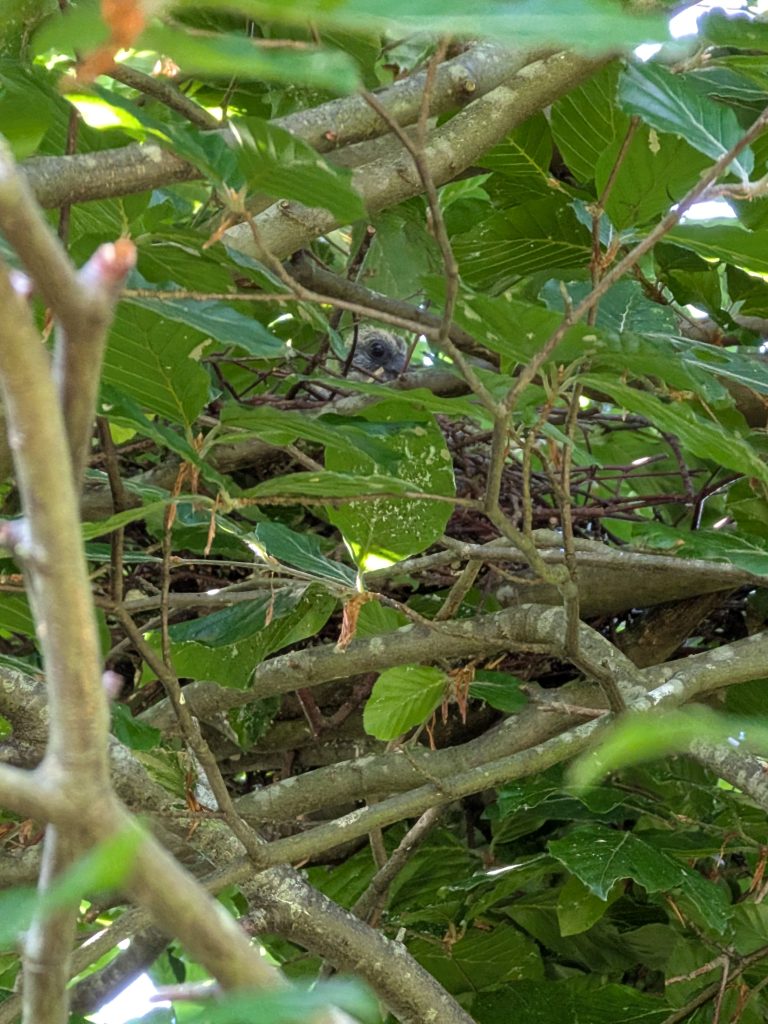
As ethical tree surgeons, we adhere to the Wildlife and Countryside Act. Between March and August, we perform thorough nesting surveys before any work begins. If active nests are found, Like this little guy we recently found in a Garden Hedge in Tonbridge, the law — and our own professional standards — require us to delay the work until the fledglings have flown. It’s part of our commitment to your garden’s ecosystem and the law.
Safety First, Always
While the guide above outlines the ideal windows for tree health, safety is a year-round priority. If you have branches overhanging your home, storm damage, or wood that looks unstable, please don’t wait for the “right” season. These hazards should be addressed immediately to protect your property and family.
General aesthetics, crown lifting, and garden clearances are also perfectly safe to perform throughout most of the year. Our goal is to balance the biological needs of your trees with the practical needs of your home.
Unsure about the best approach for your garden? We’re here to help. Contact us today for a free assessment, and we’ll provide expert advice tailored to your specific trees.