
Every so often you’ll eventually come across a tree that catches your eye and makes you wonder just how old it really is, the history it has survived or why it has grown in that way . It’s not always the biggest tree around. It might be squat, hollow, or covered in strange looking fungal growths. These special trees are often: veteran trees. But what actually earns a tree that title?
It’s Not Really About Age
The most common misconception is that “veteran” simply means “very old.” It doesn’t. A veteran tree is defined by its features, not its birth certificate. According to the Ancient Tree Forum, a veteran tree is defined as a tree that shows features of great age, survival through adversity, and high ecological value regardless of its chronological age.
That distinction matters a lot in practice. A gnarled orchard apple tree can develop veteran characteristics in just a few decades, while a slow-growing oak in a dense wood might take centuries to show the same signs. Species, environment, and history all shape the timeline. This is also why every ancient tree counts as a veteran, but not every veteran tree is an ancient veteran is the broader, feature-based category, and ancient is a specific (much older) subset of it.
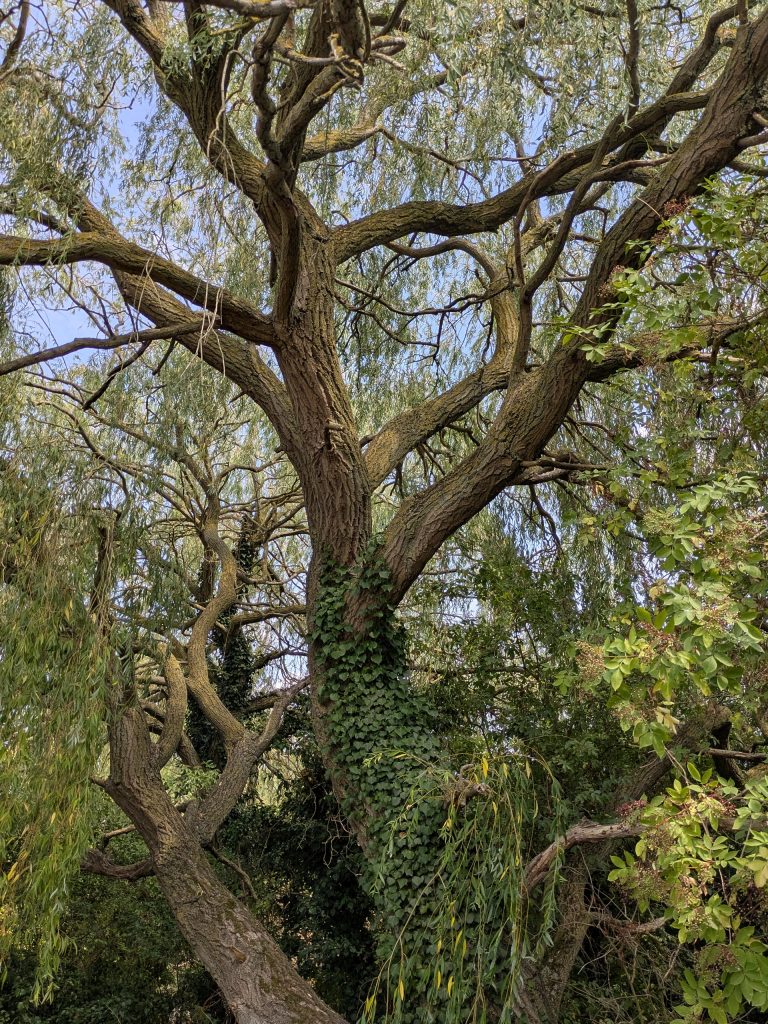
The Telltale Signs
So if it’s not about counting rings, what are experts actually looking for? A handful of physical features tend to show up again and again, and the more of them a tree displays, the stronger the case for veteran status:
- A wide girth for the species — often used as a rough starting benchmark, though what counts as “wide” varies enormously between an oak and a birch
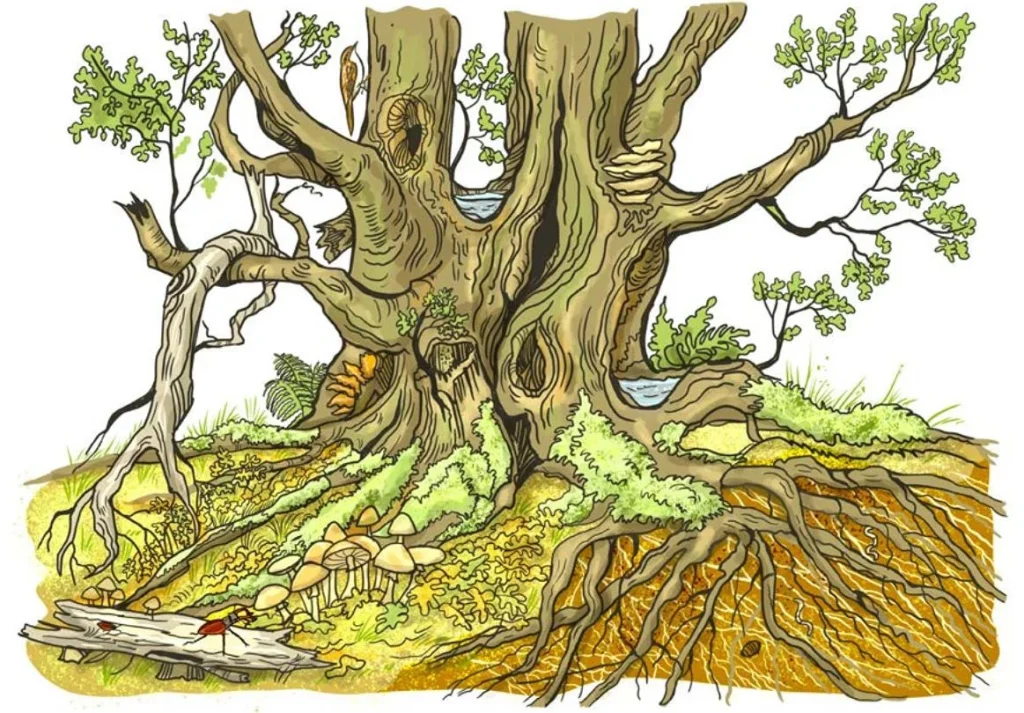
- Trunk cavities and hollowing, sometimes deep enough to shelter bats, owls, or insects
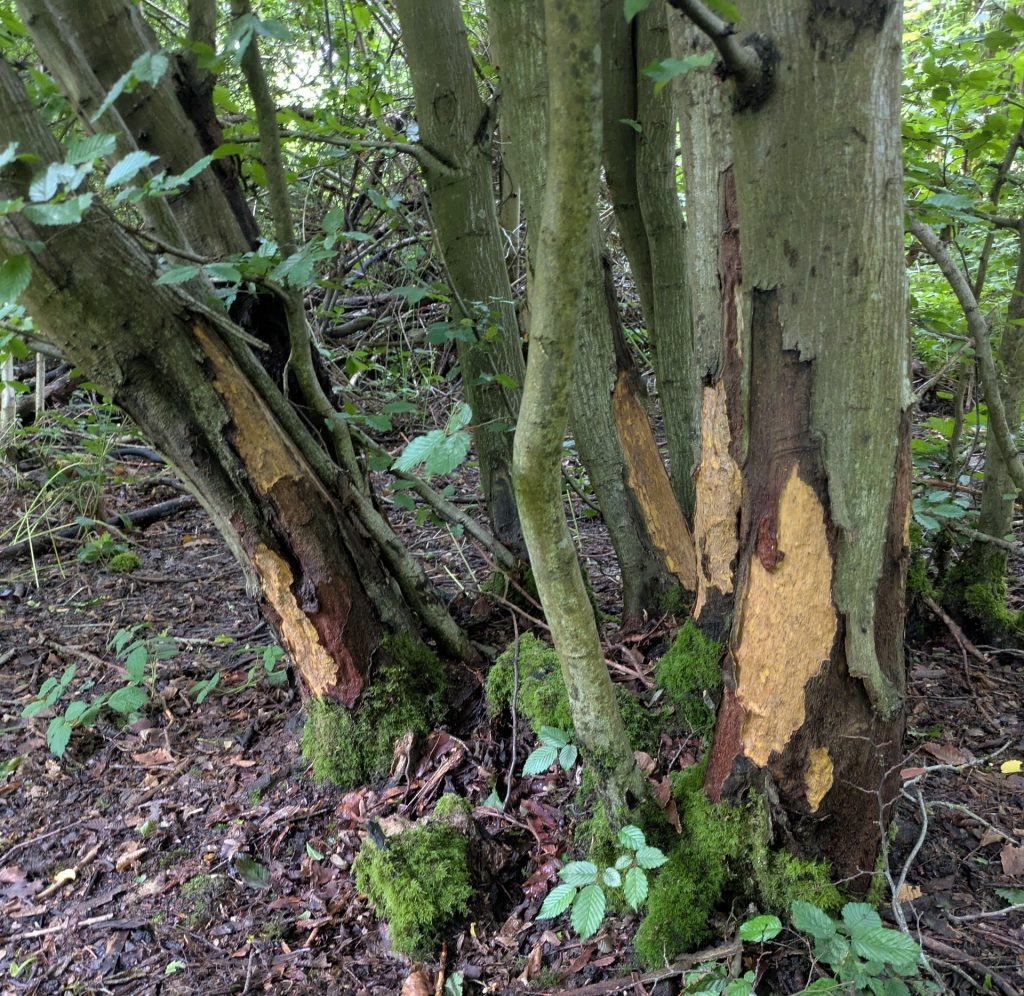
- Decay and rot holes, along with visible heartwood exposed by old wounds
- Naturally forming water pools in trunk hollows or branch forks
- Significant deadwood within an otherwise living canopy
- Fungal fruiting bodies, especially from species that cause heart rot
- A retrenching crown — the tree “growing down” and becoming lower, fatter, and more squat as it ages
- Epiphytic plants like mosses, lichens, and ferns growing on the trunk or limbs
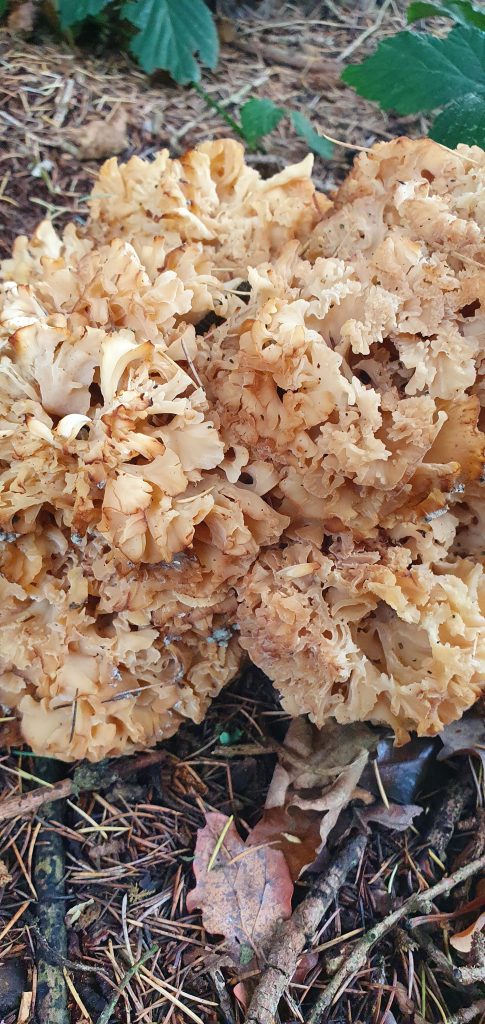
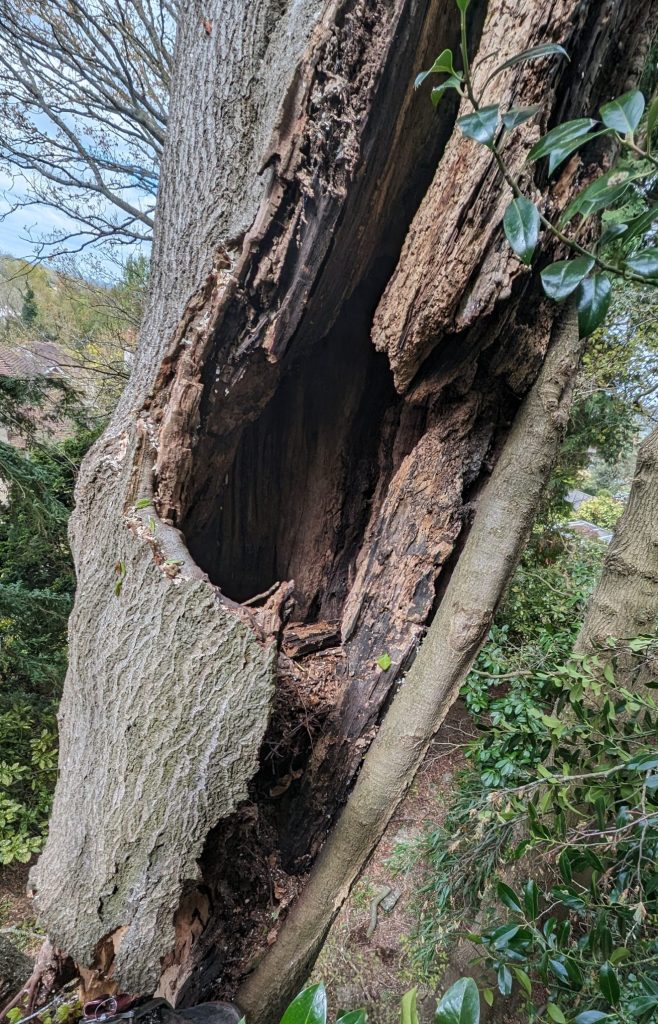
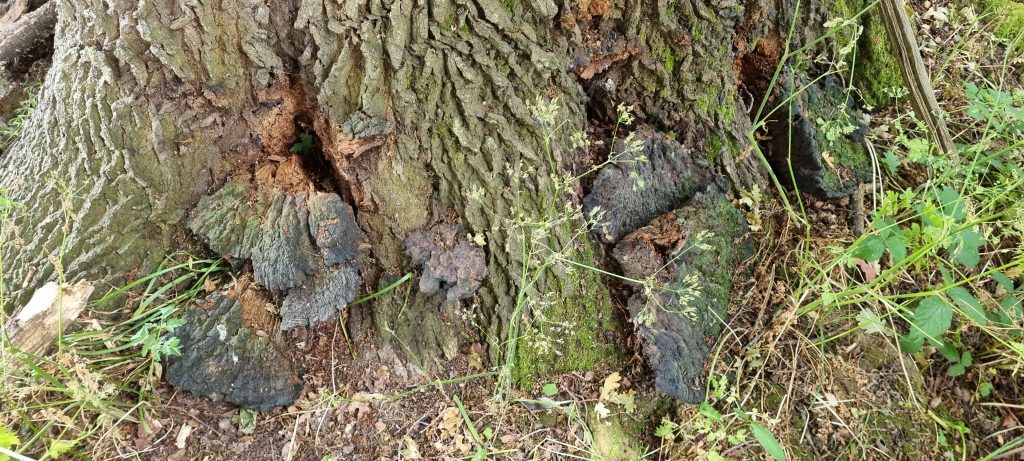
A tree doesn’t need every item on this list. Even one or two pronounced features can be enough to flag it as a veteran, especially if they’ve clearly built up over a long period of stress, damage, or natural aging.
How Trees Get There
Veteran characteristics don’t appear from age alone. They’re usually the result of surviving tough conditions. A tree living through storms, drought, disease, grazing animals, or centuries of human management like pollarding is a typical story for a veteran Tree. Trees are remarkably resilient to this kind of damage, they wall off decayed or dead sections internally while continuing to grow healthy wood around them, which is exactly how a tree can be half-hollow and still very much alive.
This is also why trees in parkland, wood pasture, and hedgerows are more likely to become veterans than trees packed into dense woodland. With room to spread and no competition crowding their crown. Finding an old, wide veteran tree deep in a dense wood is often a clue that the woodland grew up around it much later.
Why They Matter
Veteran trees provide some of the richest habitats in the landscape, a single tree provides habitat for thousands of species, their hollows, deadwood, and rot holes support specialist insects, bats, birds, and fungi that simply can’t survive in younger, more uniform trees. Many are also living history: markers of old field boundaries, remnants of vanished estates, or witnesses to centuries of land use that would otherwise be forgotten.
That combination of ecological value and cultural weight is why conservation groups push so hard to protect them, even when a veteran tree looks, at first glance, like it should have been felled decades ago.
At Tree Services Ltd we are committed to the long term conservation of veteran trees across Kent. If you have a veteran tree that requires some TLC, get in touch to arrange a Free assessment to ensure the ongoing health and form of your trees.