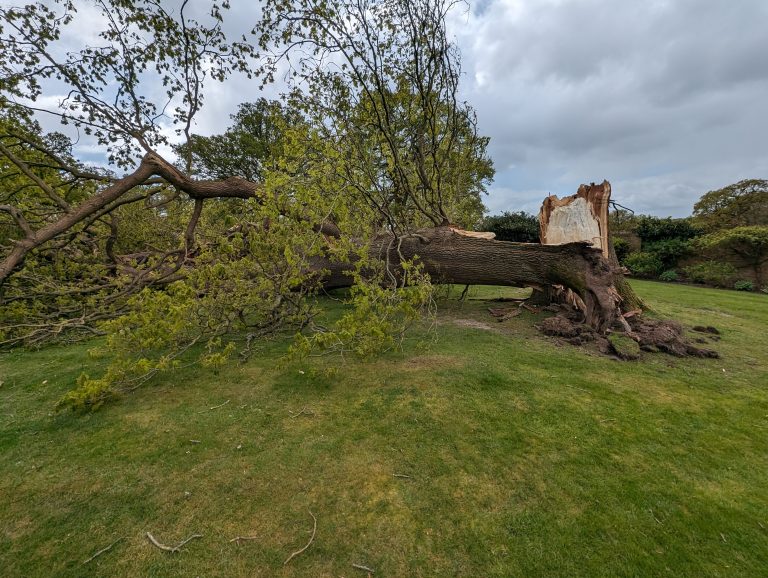
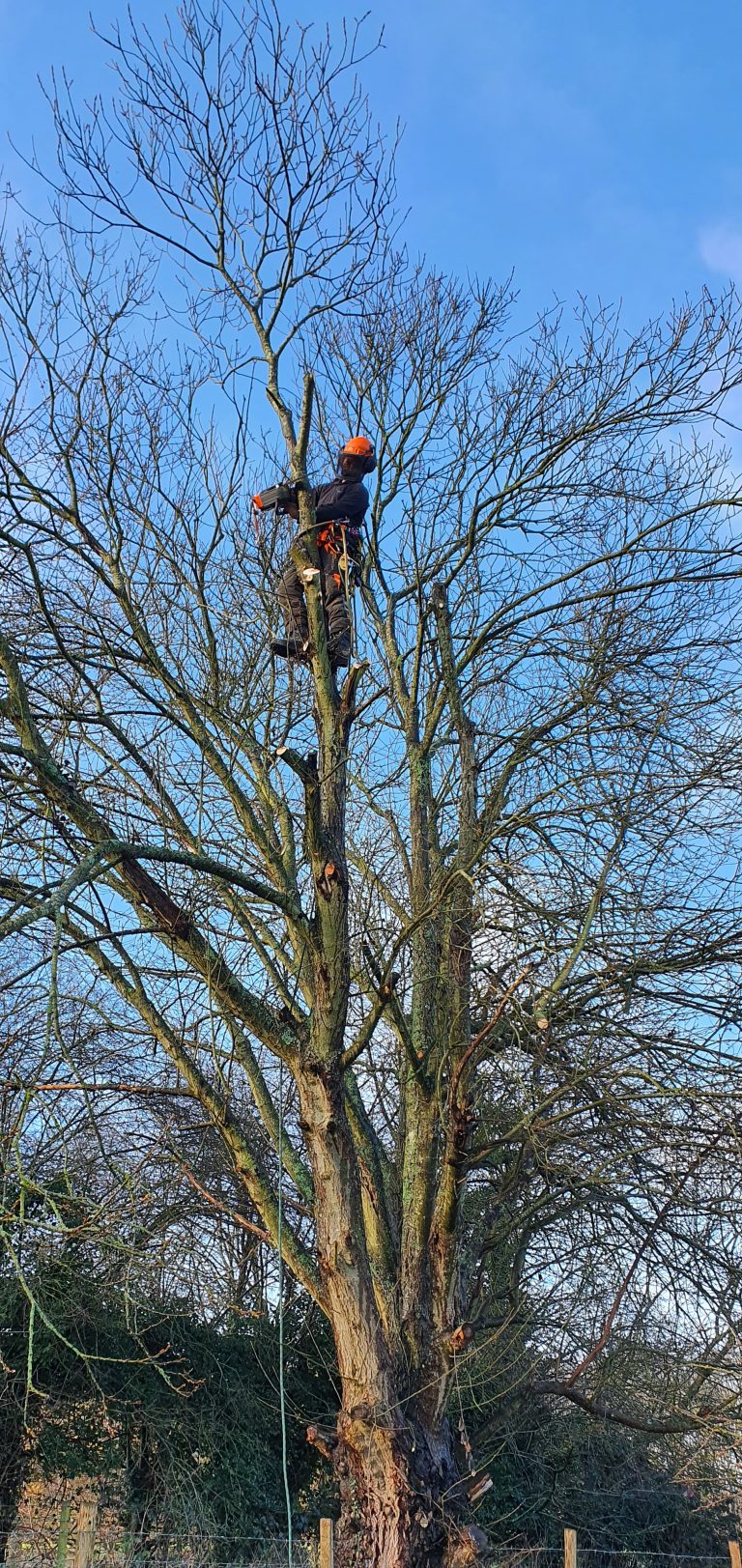
As a homeowner in Kent, your trees are likely your garden’s greatest asset. However, with the increasing frequency of UK storms and the spread of specific diseases like Ash Dieback and Honey Fungus, it is vital to know when a tree has transitioned from a beautiful feature to a potential hazard.
At Tree Services LTD, we believe prevention is better than a cure. Here are the primary signs that your tree may be structurally compromised or diseased.
Crown Dieback & Deadwood
If the very top of the tree (the crown) looks sparse or has bare, brittle branches while the rest is in leaf, the tree is under significant stress.
The Risk: Dead branches (deadwood) can fall without warning, even on calm days.
The Solution: Often, a Crown Reduction or Deadwooding can remove the immediate danger while we investigate the root cause.
Fungi and Mushrooms
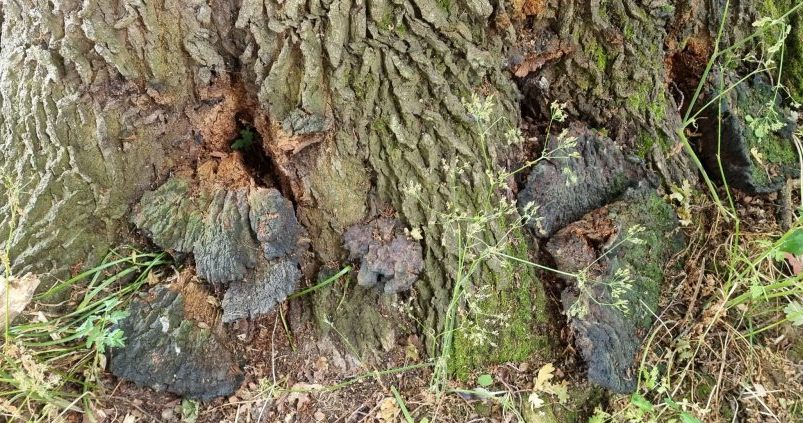
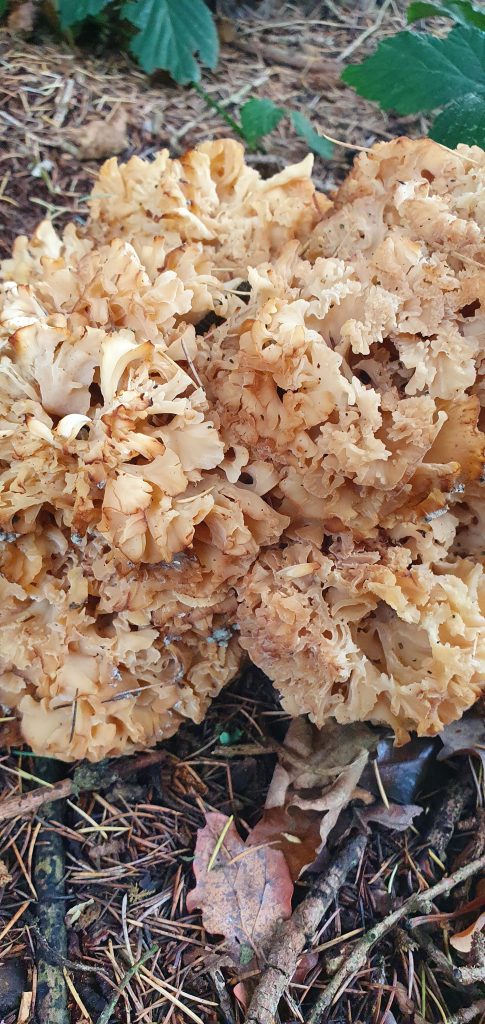
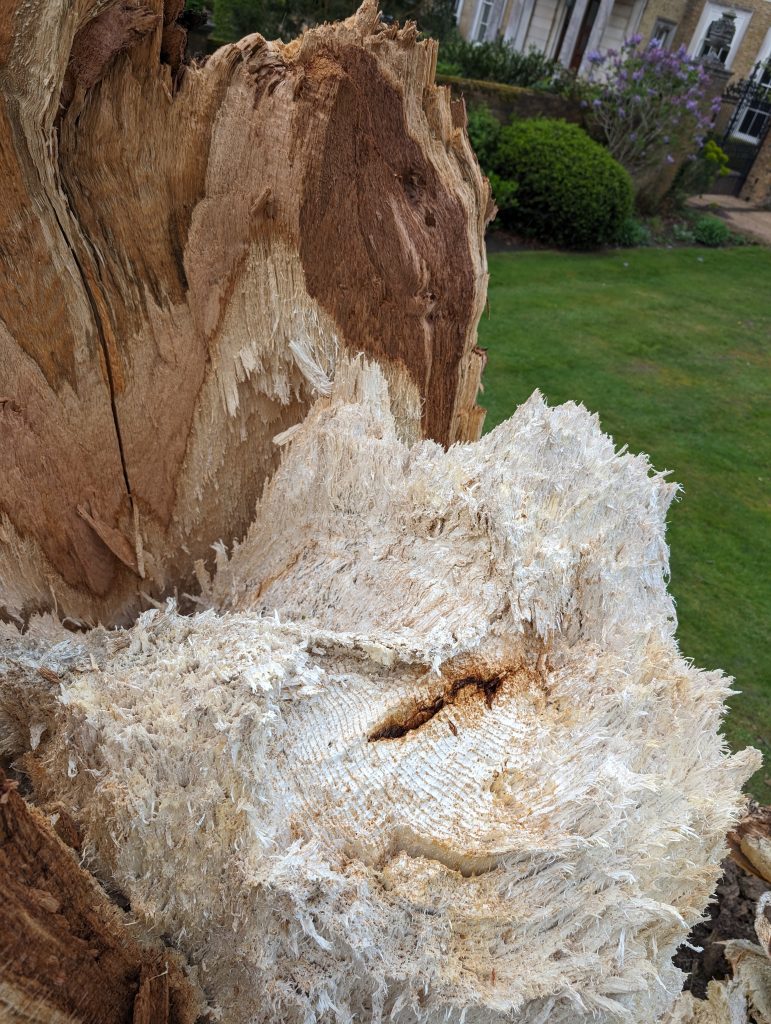
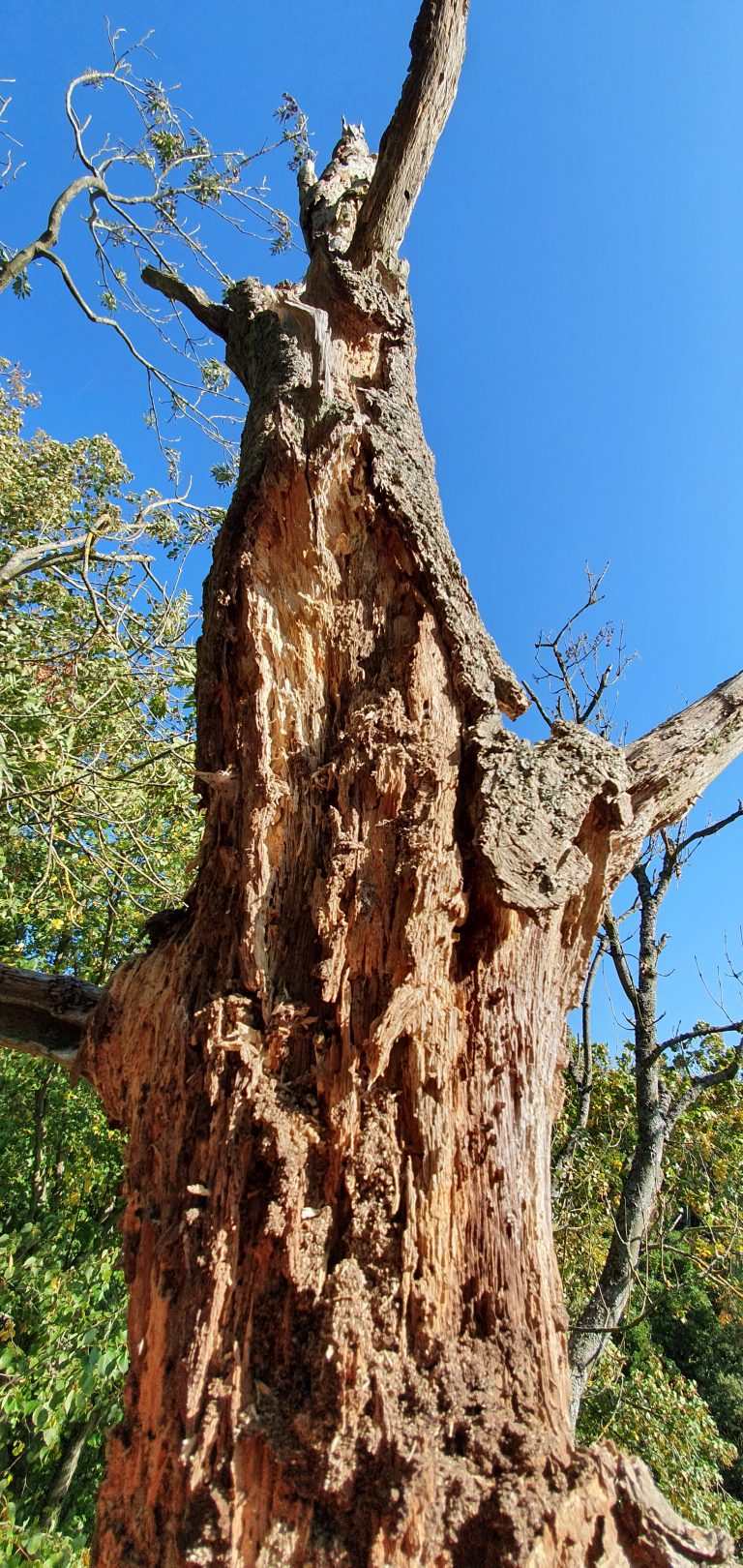
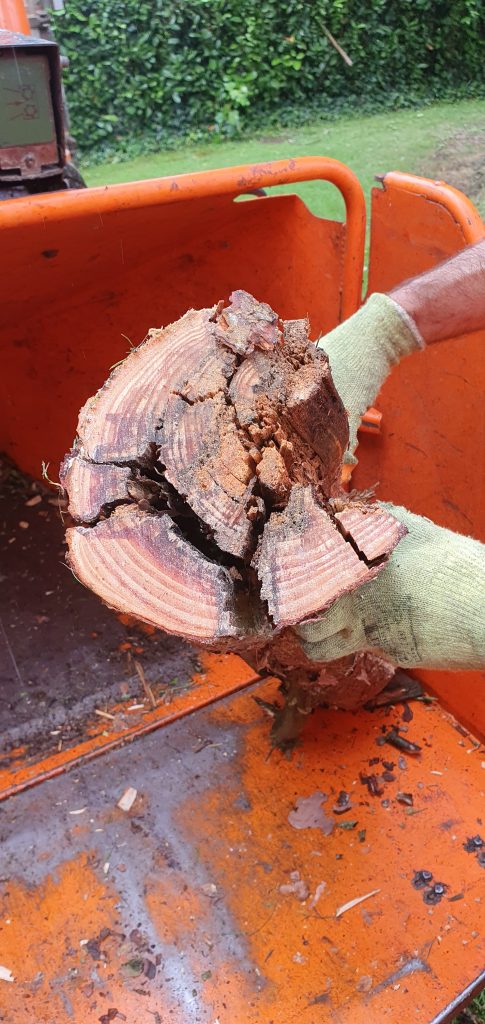
Seeing mushrooms or “brackets” growing on the trunk or around the root flare is often a sign of internal decay.
The Culprit: In the UK, Honey Fungus (Armillaria) and Giant Polypore like these pictured here, are common. They eat away at the structural wood from the inside out.
The Solution: If the fungus is a “heart-rot” species, the tree may be hollow and require Straight Felling or Sectional Dismantling for safety.
Cracks, Splits, and 'V' Forks
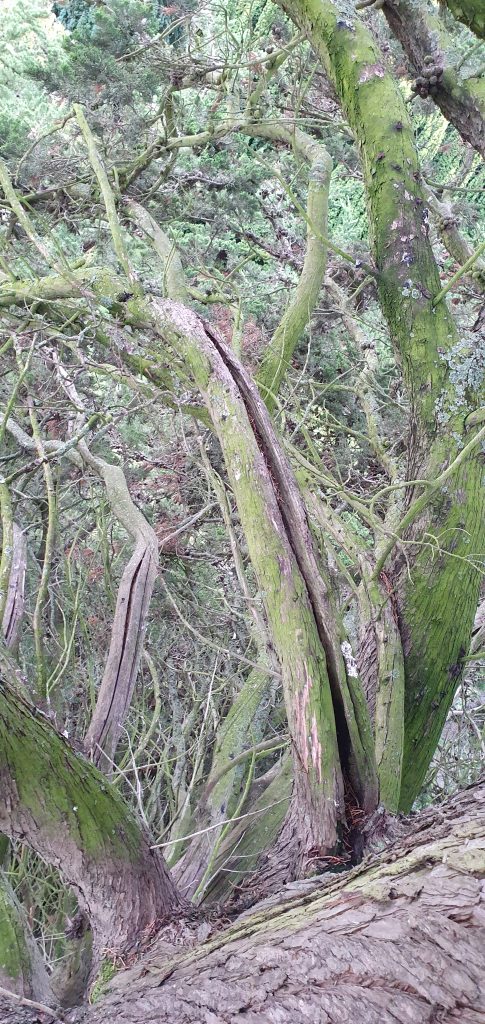
Look at where the main stems of the tree meet. A strong union looks like a ‘U’ shape. If it looks like a tight ‘V’, it is a “weak fork.”
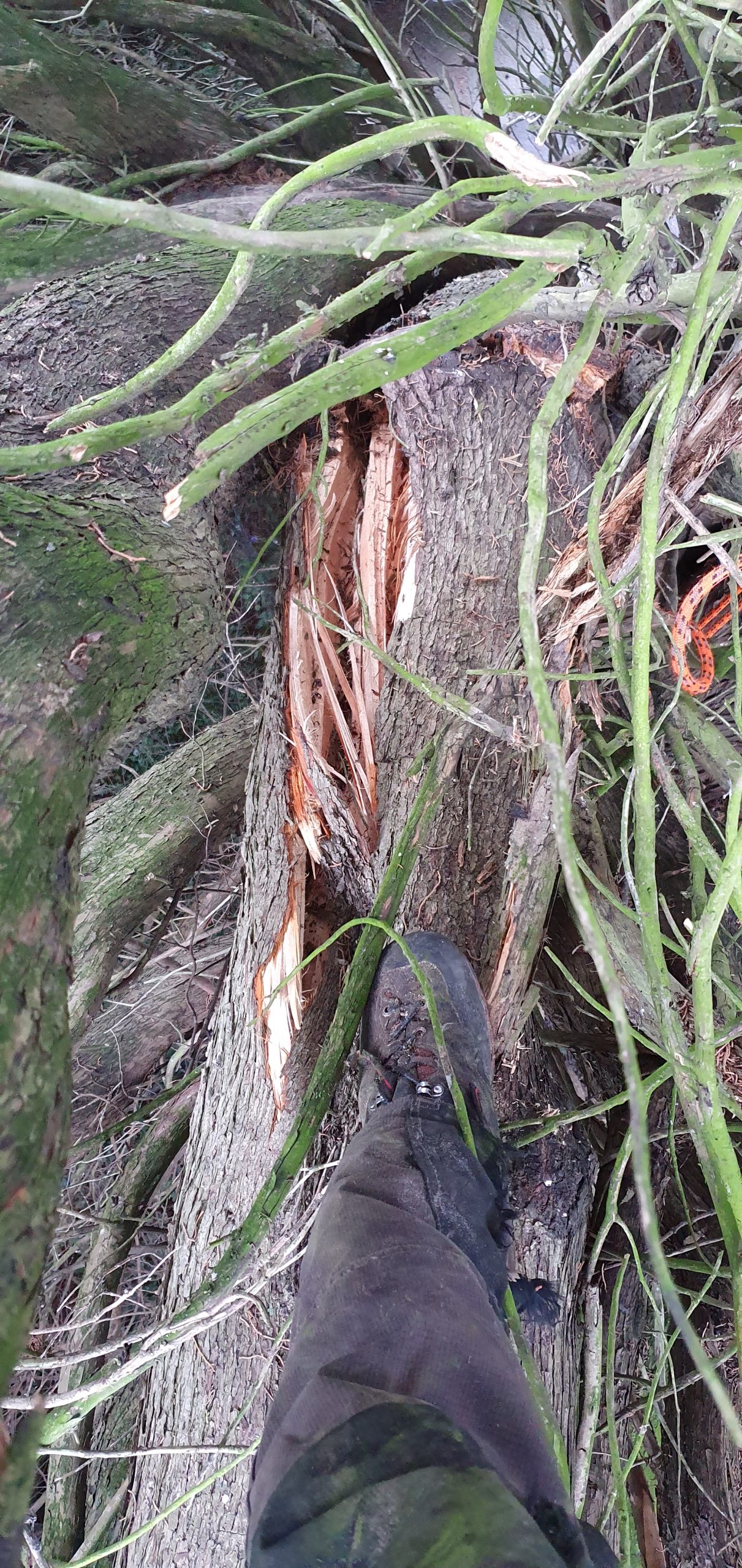
The Risk: These are prone to splitting during high winds. Look for deep cracks or “bleeding” sap in these areas.
The Solution: We can often save these trees using Cabling and Bracing or by reducing the weight of the limbs through targeted Pruning.
Cavities and Hollows
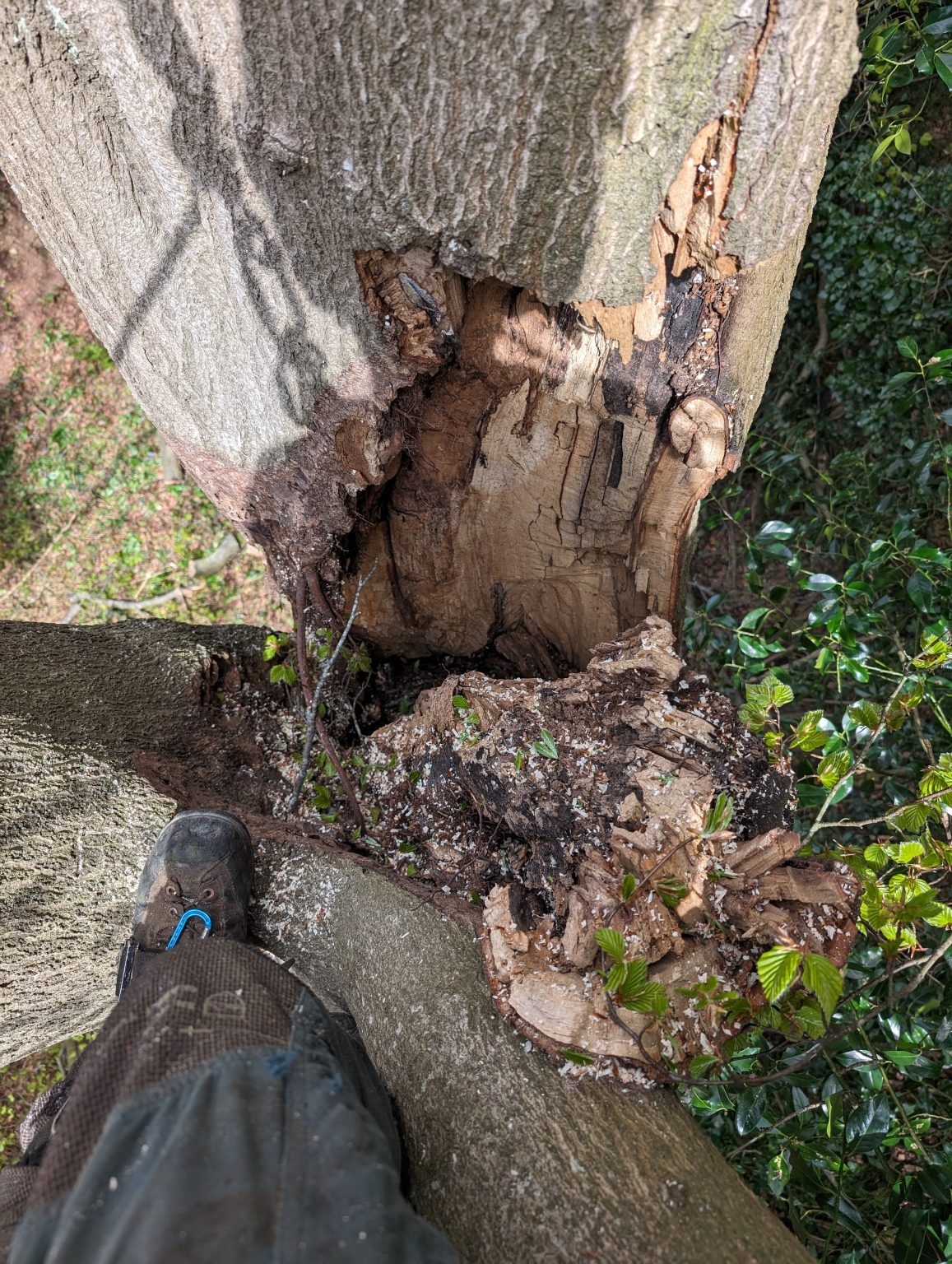
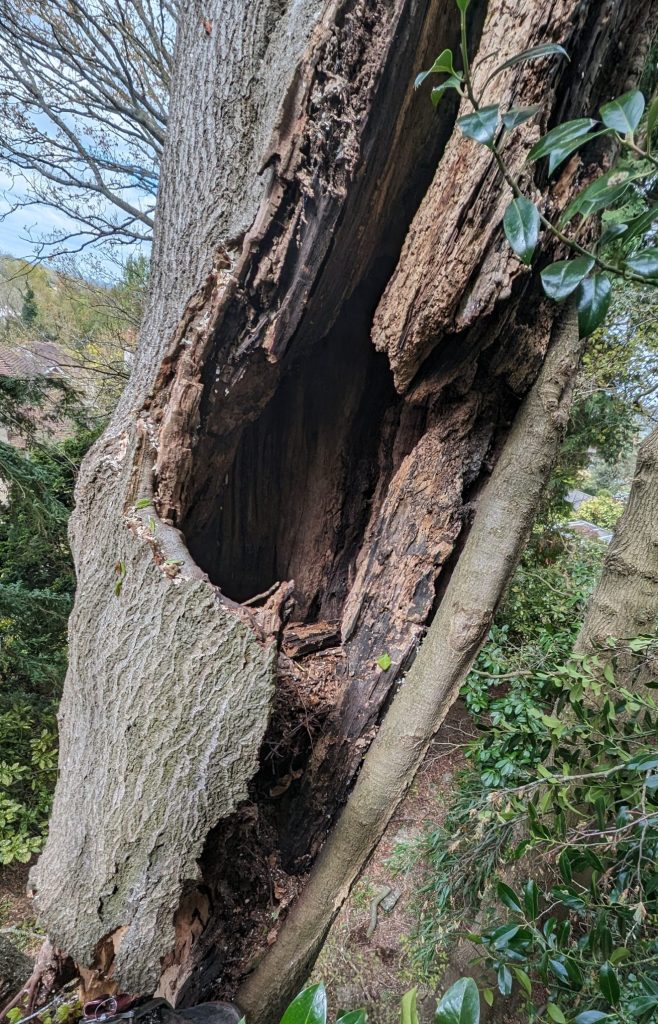
Old “vandalism” or poor previous pruning can leave holes in the trunk. While a small hole is fine for owls and squirrels, a large cavity can weaken the main structure.
The Solution: We use professional assessments to determine if there is enough “sound wood” left to keep the tree standing or if a reduction is necessary to lower the wind leverage.
Root Heave and Leaning
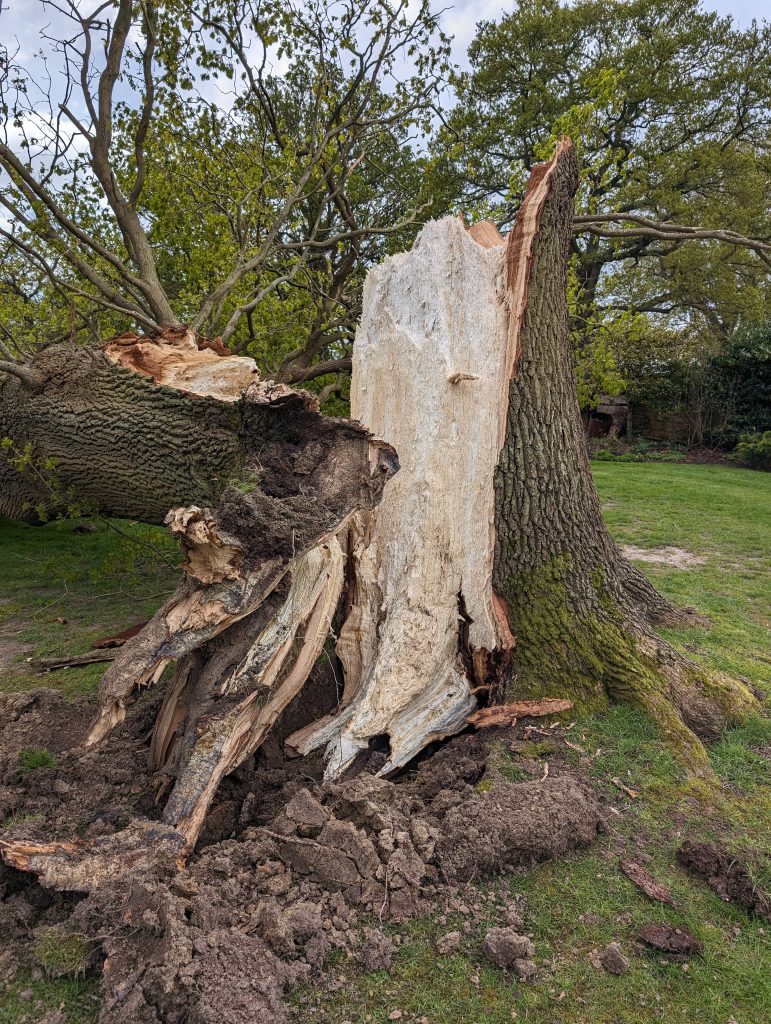
A tree that has always leaned is usually safe—it has grown “tension wood” to compensate. However, if a tree has suddenly started to lean, or if the soil at the base is cracking and lifting (root heave), it is an emergency.
The Risk: This indicates the root system is failing.
The Solution: This usually requires immediate removal to prevent the tree from falling on buildings or power lines.
Get a professional assessment
Don’t leave it to chance. If you are worried about a tree on your property in Tonbridge, Sevenoaks, or across Kent, give us a call. Our NPTC-qualified team can provide a site visit and expert advice to ensure your home stays safe.